Screeding Services
Professional Floor Screeding Contractors in London & the South East
O. C. Floor Screeding specialises in floor screeding for domestic and commercial projects. With over 30 years experience, we install high-quality screeds for extensions, new builds, renovations, apartments, schools, offices and industrial buildings. We provide sand and cement screed, fibre reinforced, fast drying, underfloor heating, polymer, liquid and granolithic screeds to suit every project.
We can provide a range of screeds to meet all your project requirements. With our experience, we have the knowledge to choose the correct screed and the exact quantity of materials to use.
Using our screed pumps to site mix the screed gives greater flexibility, ensuring that we have control over standards of materials used and is more economical. We use the finest quality products which means that the standard of our screed is superior.
We use a wide variety of products from a range of manufacturers so that we can offer you the most efficient and economical solution for your project.




Sand and Cement Screed CONTRACTORS LONDON & SOUTH EAST
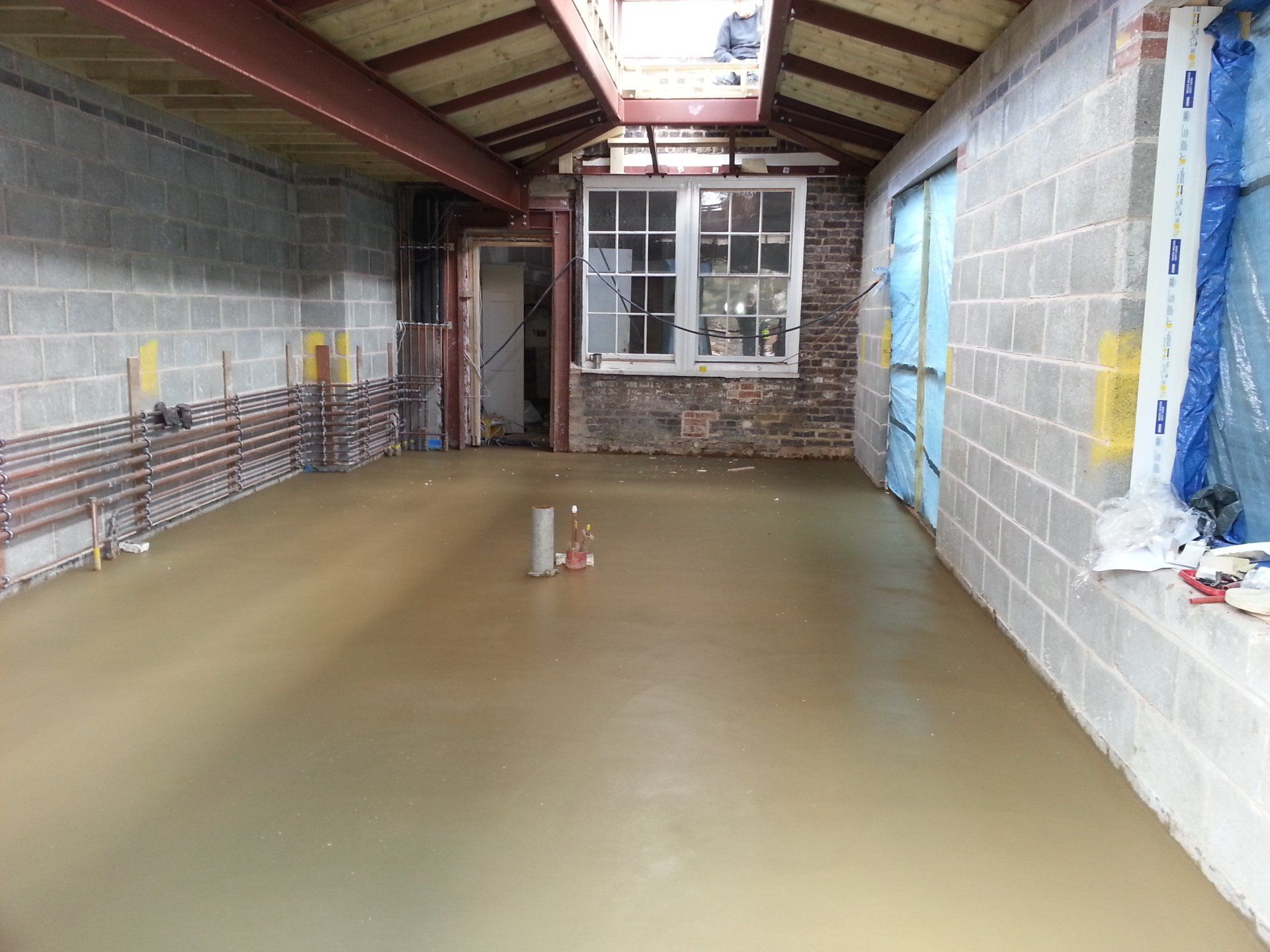
Screed is made from sharp sand, cement and water. It is also known as traditional screed. A pump is used on site to combine these elements into screed. Other products (known as curatives, additives or binders) can be combined with the sand and cement to achieve different functions such as to dry faster, be stronger, or thinner depth etc. Sand and cement screed can be laid floating, bonded or unbonded depending on the depth laid.
Call us today for advice about your project and a free quotation.
Why Choose Traditional Sand and Cement Screed?
Benefits
- Proven track record with decades of historical use in the construction industry.
- Suitable for most domestic and commercial projects
- Strong and durable floor construction, either laid bond, unbonded or floating.
- Compatible with underfloor heating systems.
- Allows falls and varying depths to be formed where required.
- Can be used with fast drying additives to allow floor finishes quickly.
O. C. Floor Screeding provides a full range of screed systems and so we can recommend the most appropriate solution for your project.
FAQs
Can traditional screed be used with underfloor heating?
Yes. Traditional screed is suitable for use with underfloor heating systems and is commonly used with PP fibres to help minimise shrinkage and cracking. Experienced screeding contractors, like ourselves, will ensure that the screed is well compacted around all the pipework and the insulation laid underneath the pipes will ensures that the heat always rises upwards into the room.
How long does traditional screed take to dry?
Standard sand and cement screed typically dries at approx. 1mm per day, can receive light foot traffic in 24hrs and can receive floor finishes in approx 6-8 weeks depending on screed thickness, ambient conditions and the type of flooring being laid on top of it.
Can traditional screed achieve high standards of flatness?
Yes, when installed by experienced screeders, such as ourselves, it can be laid to the highest standards of SR1 (surface regularity). Liquid screed can only be laid to a poor SR3 level of flatness. Plus it is a semi dry screed, so can be adjusted to accommodate different flooring types and door thresholds and laid to falls if needed.
Is sand and cement screed strong?
Yes, traditional screed is relatively strong for compressive and tensile strength hence its continued use in construction over the years.
What flooring preparation is required?
Floor preparation for traditional screed is minimal, it can be laid directly onto concrete, plastic membrane or insulation and does not need to be contained like a Liquid Screed. Floor finishes can be applied directly onto it without any preparation, especially tiling.
Do I need fast drying screed?
Where floor finishes are required quickly, fast drying screed systems can be more appropriate. As we provide a wide range of screeds, please contact us for the most appropriate solution for your project.
Fibre Reinforced Screed CONTRACTORS LONDON & SOUTH EAST
Fibre screed, also called PP fibre or reinforced screeding, is excellent in any situation. Polypropylene fibres (referred to as PP fibres) are combined with the sand and cement screed and they are thoroughly dispersed during the mixing process. This practise of combining products to the basic components of screed is called admixtures.
The use of fibres inhibits shrinkage, settlement cracking, increases strength, permeability and is more impact resistant. It can be used as a bonded, unbonded, or floating screed, over insulation and with under floor heating. At O. C. Floor Screeding we use it as a standard with all our screed systems as we believe that it provides a superior quality.
Call us today for advice about your project and a free quotation.
Why Choose PP Fibre Reinforced Screed?
Benefits of Fibre Reinforced Screed
- Reduces plastic shrinkage and settlement cracking.
- Increases the durability and toughness of the screed.
- Provides improved resistance to impact and abrasion.
- Particularly suited to underfloor heating systems.
- Can be used in bonded, unbonded and floating constructions.
- Suitable for both domestic and commercial applications.
- Offers enhanced performance.
- Used as a standard by O.C. Floor Screeding to provide a higher quality floor.
We incorporate polypropylene fibres into all of our sceed systems as standard because we believe they provide increased durability and improved resistance to shrinkage cracking.
FAQs
What is fibre reinforced screed?
Fibre reinforced screed is a traditional sand and cement screed containing polypropylene fibres which are evenly dispersed throughout the mix. These fibres help improve the performance and durability of the screed.
Why are fibres added to screed?
Polypropylene fibres help reduce plastic shrinkage and settlement cracking whilst increasing the toughness and impact resistance of the screed.
Is fibre screed suitable for underfloor heating?
Yes, PP fibre reinforced screed is particularly suitable for underfloor heating systems because the fibres help minimise shrinkage and cracking caused by thermal movement.
Can PP fibre screed be used in domestic properties?
Yes, fibre reinforced screed is suitable for domestic and commercial projects and can be laid bonded, unbonded or floating.
Is fibre reinforced screed stronger than standard screed?
The addition of fibres improves the toughness and crack resistance of the screed. It is commonly used to provide enhanced performance compared with traditional sand and cement screeds.
Do I still need steel mesh reinforcement?
For most domestic projects, PP fibres are adequate. For other incidents, steel mesh may be required such as for load bearing. Please call us if you need advice or read more here
Can PP fibre screed be made fast drying?
Yes, fast drying additives can be added into the fibre reinforced screed where a faster drying time is needed.
FAST DRYING SCREED
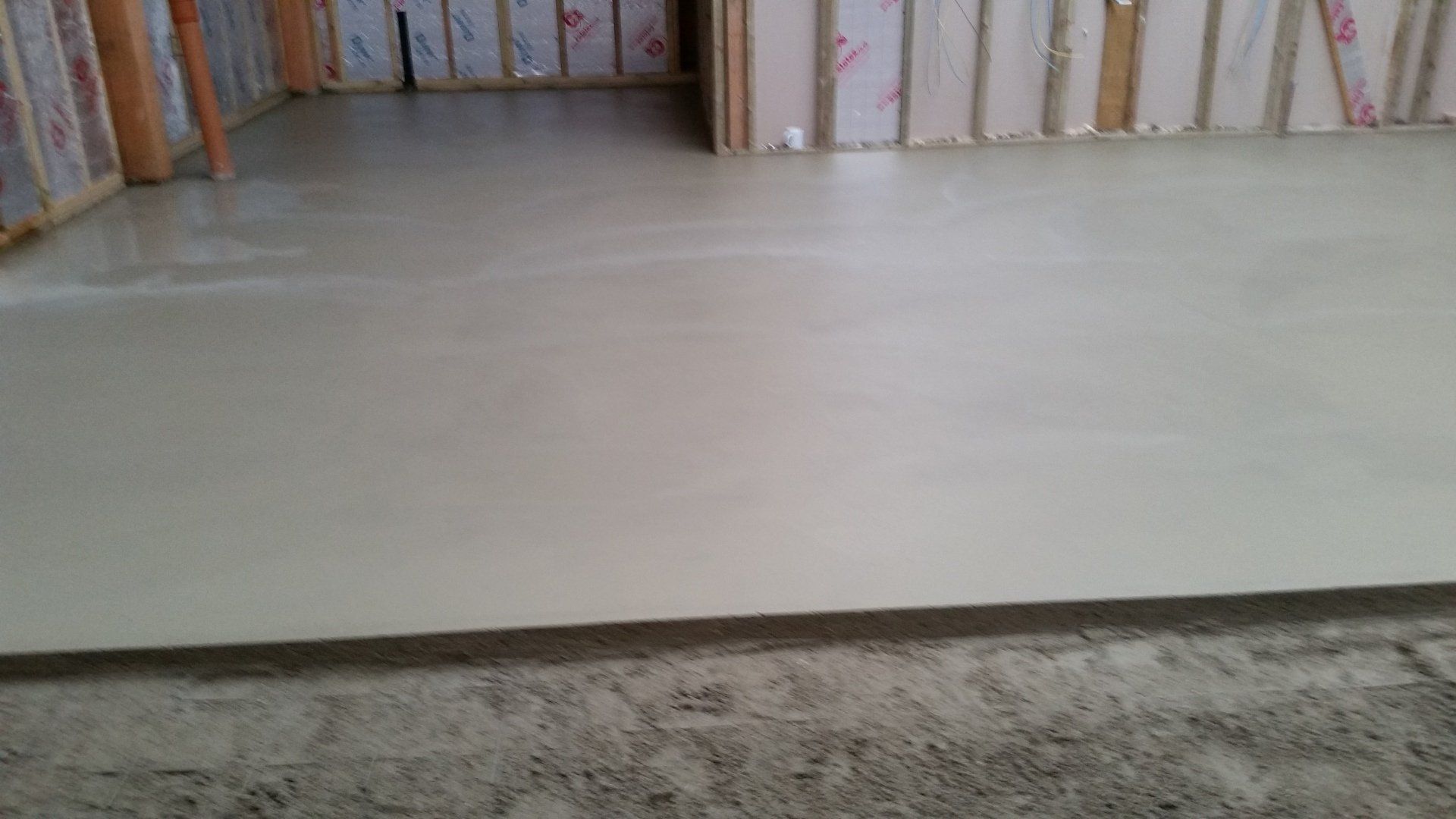
Fast drying screed also known as quick drying screed and rapid drying screed - allows for the rapid drying of the screed. It can receive foot traffic earlier, floor finishes can be laid sooner, underfloor heating can be commissioned quickly, and it will reduce your overall build time. Especially important to consider using it when laying a wooden or engineered floor, as these are the most sensitive to damage by moisture. Standard screed drying times are approx. 1mm a day and a standard depth of screed is usually dry to receive floor finishes in approx. 4-6 weeks. Compared to this, rapid drying screeds can speed up the drying time to hours.
Why Choose Fast Drying Screed?
Benefits
- Reduce drying times and earlier access for follow-on trades.
- Floor finishes can be installed significantly sooner than with a sand and cement screed or liquid screed
- Ideal where project completion dates are critical
- Suitable for bonded, unbonded and floating constructions.
- Compatible wih underfloor heating systems
- Available in different strengths and drying rates to suit your needs
- Reduced risk of moisture-related damage to sensitive floor finishes such as timber and vinyl.
- Allows faster commissioning of underfloor heating systems.
FAQs
How quickly can fast drying screed receive foot traffic?
Most systems can accept light foot traffic much sooner than traditional screed though timing does depend on the product, site conditions and ambient temperatures. Normally it can take foot traffic within a couple of hours to 24 hours.
When should quick drying screed be used?
Fast drying screed is particularly beneficial where floor finishes need to be installed quickly or where programme times are tight.
Is fast drying screed suitable for underfloor heating?
Yes, the two go hand in hand. Fast drying screed can be used with underfloor heating and allows the heating system to be commissioned sooner than traditional screeds.
Can all screeds be made rapid drying?
No. Fast drying additives and specialist binders are generally only incorporated into traditional semi-dry (sand and cement) screeds. Liquid screeds cannot be accelerated in the same way.
Is fast drying screed stronger than other screeds?
Fast drying screed is one of the stronger screed systems and is stronger than latex screed, liquid screed and traditional screed. It offers higher strengths and so is suitable for a wide range of domestic and commercial applications.
Does quick drying screed reduce overall build times?
Yes. Earlier installation of floor finishes and quicker access for follow-on trades can significantly reduce the overall construction programme.
How quickly can floor finishes be laid on top of rapid drying screed?
Depending on the product used, site conditions and the ambient temperature, floor finishes can be laid within 24 hr to two weeks time.
What is Fast Drying Screed
Fast setting screed normally consists of a specialist liquid hydraulic binder that is added to the screed mix or is provided as a pre bagged cement replacer. Both these types promote increased drying times. Differing strengths and types of fast drying additive allow for differing drying times. They also have the benefit of being stronger with higher compressive strengths. Only semi dry screeds can be fast drying.
Fast drying screed is suitable for most floor situations such as over insulation and with underfloor heating. It can receive all types of floor finishes. Accelerated screeds have to be mixed in a screed pump to ensure that the additives are thoroughly mixed. It also must be batched in stages as the average working time of the mix is approx. 60 minutes.
Polymer Screed contractors london & south east
Polymer screed is a high strength modified sand and cement screed that can be laid at reduced depths from approx. 10mm+, making i ideal where floor build-up is restricted..
Polymer screed is a combination of sharp sand and cement strengthened with a polymer resin. Whilst being extremely hard wearing it has increased strength, bonding properties, shrinkage and cracking is minimised, flexural strength is improved, it has water resistant qualities and the added benefit of drying faster than a traditional sand and cement screed, at approx. 25mm a week.
Polymer Screed is ideal for floors that must bear heavy loads such as a garage floor, industrial fridges etc. It can be applied bonded on top of ground floor slabs, precast concrete and suspended floor or unbonded and floating.
Because O.C. Floor Screeding installs a wide range of screed systems, we only recommend polymer screed where it is genuinely the best solution for your project. Call us today for advice about your project and a free quotation.
What is Polymer Screed?
Benefits of Polymer Screed?
- High strength even at reduced screed thicknesses.
- Excellent adhesion to concrete substrates.
- Suitable where floor build-up is restricted
- Increased flexibility compared with traditional screeds.
- Can be used for bonded screed applications
- Suitable for domestic, commercial and refurbishment projects
- Excellent durability and long term performance
- Added benefit of being faster drying than traditional or liquid screed.
Every project has different requirements. At O. C. Floor Screeding we offer traditional, fibre reinforced, fast drying, liquid, granolithic and polymer screeds, allowing us to recommend the most appropriate system for your project rather than a one-size-fits-all solution.
FAQs
What is polymer screed?
Polymer screed is a sand and cement screed modified with specialist polymer additives to improve strength, flexibility and adhesion. It is commonly used where high performance is required or where a thinner screed depth is needed.
When should polymer screed be used?
Polymer screed is ideal where reduced screed thicknesses are required or where additional strength and adhesion are needed, such as refurbishment projects and commercial applications.
Can polymer screed be used with underfloor heating?
Yes. Polymer screed can be used with underfloor heating systems where specified and installed in accordance with the manufacturer's recommendations.
Is polymer screed stronger than traditional screed?
Polymer screeds are designed to achieve high strengths while allowing thinner sections than conventional sand and cement screeds. The most appropriate system depends on the project requirements.
How thick does polymer screed need to be?
One of the advantages of polymer screed is that it can often be laid at reduced thicknesses compared with traditional screeds, helping where floor build-up is restricted.
Is polymer screed fast drying?
Yes. Polymer screed has the added benefit of being fast drying. It dries in approx. 25mm a week but if you require a faster drying time than there are other options.
Liquid Screed Contractors london & south east
Liquid screed - known by its technical name anhydrite screed and referred to as flowing screed or poured screed. It was originally developed for large, continuous spaces. It is self-levelling and is poured via hoses directly onto a floor covered with DPM (damp proof membrane) for a fast application. Tripods are placed within the screed to asses the depth, whilst screeders use dappling bars to help spread the screed and remove air pockets. Anhydrite reduces cracking, is lightweight, protein free and high strength. It can be used over insulation and with underfloor heating.
Call us today for advice about your project and a free quotation.
Understanding Liquid Screed
Benefits of Liquid Screed
- Suitable for large, open areas
- Fast installation
- Ideal for underfloor heating
- Provides excellent thermal conductivity
- Reduced shrinkage and durability
We offer a comprehensive range of screeds rather than providing one type of screed and so we can recommend the most appropriate product for your project, programme timescale and floor finish requirement.
FAQS
Is liquid screed suitable for underfloor heating?
Yes, it is suitable due to its excellent thermal conductivity and ability to fully surround the underfloor heating pipes.
How long does liquid screed take to dry?
Liquid screed dries at approx. 0.5mm a day so it is actually one of the slower drying screed systems.
If your project requires faster drying times then our fast drying screed systems will be a more suitable solution.
What floor preparation should be in place before laying liquid screed?
Plastic sheeting will need to be laid and lapped at the edges to stop the liquid screed escaping. If underfloor heating is being used, plastic sheeting needs to be laid and lapped underneath and on top of the insulation boards to protect it from the chemicals within the screed .
Does liquid screed require additional preparation before laying floor finishes?
Yes, due to the drying process, surface lattice (hardened powder/scum) occurs which requires sanding and it might then need latex to provide a smooth base for floor finishes. Please note, tiles do not bond well onto liquid screed.
Is liquid screed suitable for every project?
No, different projects have different requirements. We can help recommend the most suitable system for you from our large range of screed products.
Granolithic Screed
Granolithic screed is a high strength, hard wearing flooring system. It is ideal for areas that are subjected to heavy compressive weights such as warehouses, industrial units, plant rooms and weightlifting areas etc. It is a combination of sharp sand, cement, granite aggregate and polymer additive that is site batched.
Granolithic Screed can be applied bonded or floating at approx. 30-100mm+. Wire mesh reinforcement can be used to form a structural screed. Due to its heavy-duty nature, it can be left as a wearing surface needing no floor finishes.
Call us today for advice about your project and a free quotation.
WHEN CAN I USE GRANOLITHIC SCREED
Benefits of Granolithic Screed
- Exceptionally strong screed with high compressive strength, resistant to heavy traffic and abrasion.
- Ideal for warehouses, factories, workshops, garages, gyms, sub stations and plant rooms.
- Suitable for heavy loads such as forklifts, pallet trucks and machinery.
- Can be left as a finished wearing surface or painted with epoxy paint.
We offer a comprehensive range of screed systems rather than promoting one product. This allows us to recommend the most suitable screed base on your project, floor loading requirements and programme.
FAQs
What is granolithic screed used for?
Granolithic screed is primarily used in industrial, commercial and domestic buildings where floors are subjected to heavy loads, machinery or high point loads. It provides a durable, hard-wearing surface designed for demanding environment.
Can granolithic screed be left uncovered?
Yes. In many warehouses, plant rooms, electrical sub-stations, and garages, screed is left as the final wearing surface. It can be painted with an epoxy paint to help prevent stains.
Is granolithic screed suitable for domestic properties?
Granolithic screed can be used in domestic plant rooms, home gyms where point loads can occur when weights are dropped onto the floor and garages which take the heavy load of cars driving in and out of the floor.
Can granolithic screed be used with underfloor heating?
It can be, but it is not normally the preferred option. Depending on the project requirements, traditional or fast drying screeds may provide a more suitable solution.
Is granolithic screed stronger than standard sand and cement screed?
Yes, granolithic screed is a denser, more abrasion-resistant, harder wear and loading screed..
Screed Reinforcement
Reinforcement in screeding helps to prevent cracking, curling and shrinkage during the drying process. The reinforcement controls and redirects any cracks that may occur. Screed reinforcement comes in two forms either PP fibre or wire mesh reinforcement.
Mesh reinforcement is best for sites that must endure heavy loads and high footfall. Galvanized wire mesh reinforcement is embedded within the screed to improve its strength. It can be combined with other types of screeds to improve the floors performance.
Call us today for advice about your project and a free quotation.
Floor Preparation
O. C. Floor Screeding has a vast wealth of knowledge built on our years of experience within the industry to advise you on the most efficient floor preparation for your project.
Our screeders are trained and experience in the correct application of these primers, damp proof membranes, insulations and sealers.
If you need expert floor screed preparation, call us today for advice about your project and a free quotation.
Need Expert Screeding Services?
Call us today about your domestic or commercial project on 020 7099 6264 and we’ll be happy to help.